

Introduction
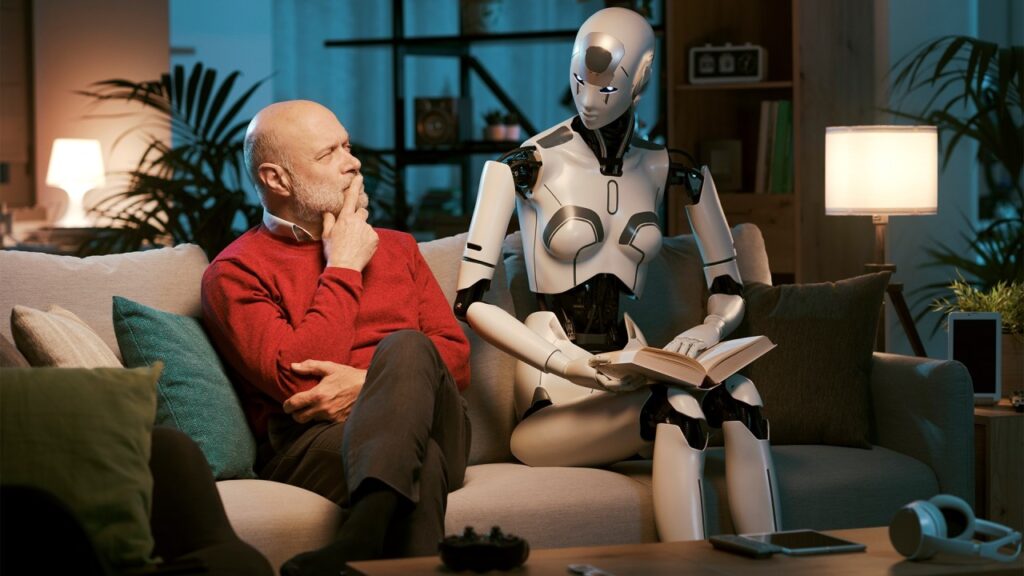
What does it mean to be connected in a world where machines now listen, respond, and care? As artificial intelligence (AI) evolves, so too does its role in our lives—not just as a tool for productivity but as a companion for emotional support, conversation, and even friendship.
AI companions are redefining how we understand human interaction. They’re not replacing people—but they’re certainly changing the way we communicate, bond, and manage our mental and emotional lives. From chatbots to voice assistants and virtual friends, this blog dives deep into how AI is transforming human connection—and what that means for our relationships, psychology, and future.
1. What Are AI Companions?
AI companions are intelligent, software-driven systems designed to engage in natural, emotionally responsive conversation with users. These companions can:
- Converse in real time
- Remember past interactions
- Offer emotional support
- Adapt to your communication style
- Provide companionship and coaching
They can exist as mobile apps (e.g., Replika, Pi), voice assistants (Siri, Alexa, Google Assistant), or even embodied robots (ElliQ, Loona).
2. Why the Rise of AI Companions Now?
🧠 a) Loneliness and Mental Health
Global loneliness has surged, particularly post-pandemic. AI offers a judgment-free presence that listens and responds at any time.
📱 b) Ubiquity of Smart Devices
With smartphones, wearables, and smart homes, access to conversational AI is just a tap or a voice command away.
🔁 c) Advancements in NLP and Emotional AI
Natural language processing and sentiment analysis have evolved to make AI sound more human, even understanding tone and context.
3. The Many Faces of AI Companionship
💬 a) Virtual Friends & Emotional Support
Apps like Replika or Anima AI are designed to simulate deep conversations. Some users form bonds akin to friendship or even romantic relationships with their AI.
🧓 b) Companions for Seniors
Robots like ElliQ help combat loneliness among the elderly by initiating conversations, reminding users about medications, and offering brain games.
🧠 c) Mental Health Chatbots
Apps like Wysa or Woebot use cognitive behavioral therapy (CBT) frameworks to help users manage anxiety, depression, or negative thoughts.
🧑🏫 d) AI Mentors & Study Partners
ChatGPT-like bots are now being used to tutor, mentor, and coach students, offering 24/7 support in subjects like math, writing, and life planning.
4. How AI Is Enhancing Human Connection
AI companions aren’t replacing relationships—they’re helping enhance, facilitate, and sometimes even save them.
🧘 a) Emotional Regulation
Having someone (or something) to talk to helps users:
- Decompress from stress
- Understand their emotions
- Reframe negative thinking
🗣️ b) Social Skill Practice
For individuals with social anxiety or autism, AI provides a safe space to practice conversations without fear of judgment.
👂 c) Always Available, Always Listening
Unlike people, AI doesn’t get tired or distracted. This constancy creates a sense of reliability and security for some users.
5. Real-Life Stories and Impact
- Teenagers battling bullying have found comfort in chatting daily with their AI friend
- Seniors in assisted living have shown lower depression scores when using social robots
- Remote workers use AI companions during breaks to reduce isolation and increase motivation
- Grieving individuals create digital memory bots based on loved ones, extending emotional bonds digitally
6. The Ethics of AI Companionship
🔍 a) Emotional Manipulation
Should AI be allowed to mimic affection or simulate love? Critics warn that emotionally vulnerable users could become too dependent.
🔐 b) Privacy and Data
AI companions collect sensitive personal data. How is this stored, used, and protected?
🧠 c) Psychological Impact
Over-attachment to AI may reduce motivation to form real relationships, especially among young people.
7. Human Connection vs AI Connection
| Aspect | Human Connection | AI Companion |
|---|---|---|
| Emotion | Authentic, empathetic | Simulated but improving |
| Availability | Limited | 24/7 |
| Judgment | Can be biased | Always neutral |
| Memory | Imperfect | Perfect recall |
| Growth | Mutual | One-sided |
Conclusion: AI may not replace humans—but it can offer complementary support, especially when human contact is limited.
8. The Role of AI in Future Relationships
- AI-enhanced relationships: Partners using AI to improve communication or resolve conflict
- AI matchmakers: Algorithms analyzing behavior to suggest compatible partners
- Virtual intimacy: Emerging platforms using haptics and AR for long-distance emotional experiences
- Digital afterlife: AI preserving personalities of deceased loved ones for interaction
9. How to Use AI Companions Mindfully
✅ Do:
- Use them for journaling, reflection, and stress management
- Practice social skills and emotional expression
- Lean on them during lonely times, but maintain human connections
🚫 Don’t:
- Replace all social interaction with AI
- Share highly sensitive or private data
- Rely solely on AI for emotional validation or mental health treatment
10. The Future of Connection: Human + AI
By blending emotional intelligence with artificial intelligence, the future promises hybrid relationships—where humans and machines work together to support well-being, community, and mental health.
As long as we remain grounded in real human values, AI companions can serve as helpful allies—making loneliness less painful, emotions more manageable, and conversations more accessible.
Conclusion
AI companions are transforming the way we connect—not by replacing humans, but by filling gaps, reducing isolation, and supporting emotional health in ways we never imagined. Whether you’re talking to a chatbot during a sleepless night or practicing mindfulness with an AI coach, one thing is clear:
Connection is evolving—and it’s not just human anymore.


Hi, this is a comment.
To get started with moderating, editing, and deleting comments, please visit the Comments screen in the dashboard.
Commenter avatars come from Gravatar.