
Introduction
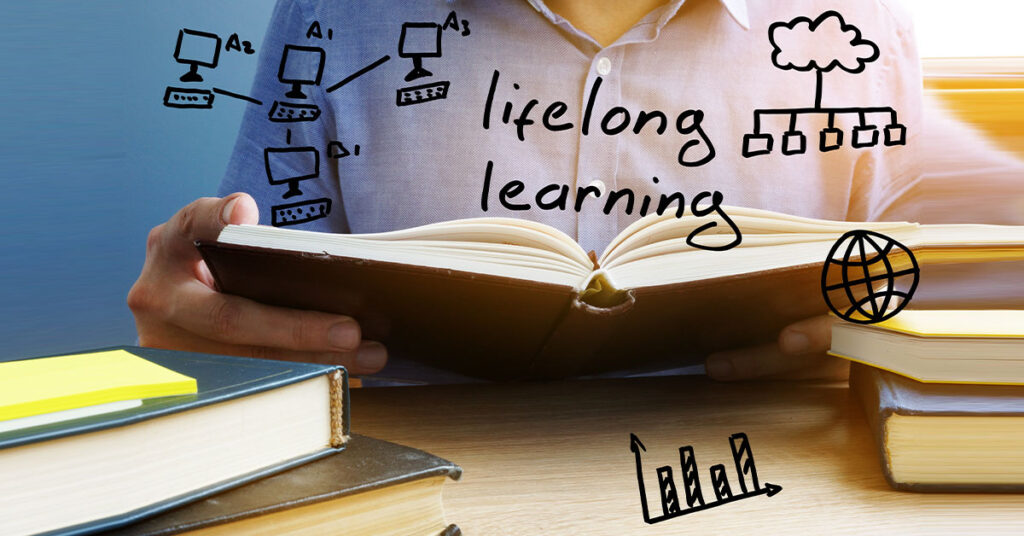
Gone are the days when learning stopped after graduation. In today’s fast-paced, tech-driven, constantly evolving world, education is no longer a one-time event—it’s a lifelong journey.
Welcome to the era of lifelong learning—a mindset and lifestyle where curiosity never retires. Whether you’re changing careers at 40, picking up a new language at 60, or learning AI tools in your 20s, the ability to continuously learn is now essential, not optional.
In this blog, we’ll explore the importance of lifelong learning, how it’s reshaping personal and professional development, and practical ways to embrace it—no matter your age, background, or career path.
1. What Is Lifelong Learning?
Lifelong learning is the ongoing, voluntary, and self-motivated pursuit of knowledge for personal or professional development.
It includes:
- Formal learning (courses, degrees, certificates)
- Informal learning (books, podcasts, YouTube, self-study)
- Experiential learning (travel, hobbies, mentoring, work projects)
- Social learning (community discussions, peer networks, co-learning)
Whether online or offline, structured or spontaneous, lifelong learning helps you stay relevant, resilient, and inspired.
2. Why Lifelong Learning Is Rising
🌍 a) Rapid Change
Technology, industries, and jobs are evolving faster than ever. What you knew 5 years ago may already be outdated.
🧠 b) Cognitive Benefits
Continued learning improves brain function, memory, and mental health. It reduces the risk of cognitive decline.
💼 c) Career Shifts
Most people now have multiple careers in their lifetime. Learning fuels adaptability and reinvention.
🤖 d) Automation & AI
As machines take over routine tasks, human skills like critical thinking, creativity, and emotional intelligence are more valuable than ever—and must be nurtured.
3. The Benefits of Lifelong Learning
| Benefit | Impact |
|---|---|
| 🎯 Career Agility | Keeps you competitive and promotable |
| 💬 Confidence | Builds self-worth and curiosity |
| 🔁 Adaptability | Helps you pivot industries or roles |
| 🧠 Brain Health | Stimulates cognitive growth and reduces decline |
| 🎨 Fulfillment | Enriches your life beyond work—hobbies, passions, purpose |
Lifelong learners don’t just survive change—they lead it.
4. How Lifelong Learning Shapes Your Career
In today’s job market, the most valuable currency is up-to-date skills.
🎓 What Employers Want:
- Self-starters who can learn new tools fast
- Cross-functional problem solvers
- Team players with strong communication
- Tech-savvy and globally minded workers
Whether you’re applying for a job or growing a business, the ability to learn, unlearn, and relearn is critical.
5. Lifelong Learning ≠ Formal Education
While degrees matter in some fields, continuous learning doesn’t always require a classroom.
📚 Informal Learning Options:
- Online platforms (Coursera, Udemy, edX)
- YouTube tutorials, Reddit communities, Medium blogs
- Podcasts & audiobooks during your commute
- Learning-focused newsletters and Substacks
- Hobby-based learning (art, music, coding, gardening)
Learning isn’t limited by your location, title, or age.
6. Lifelong Learning at Any Stage of Life
👶 In Your 20s:
- Build foundational skills: communication, digital tools, project management
- Learn to learn (critical thinking > memorization)
🧑💼 In Your 30s–40s:
- Upskill for promotions or transitions
- Start side projects or passion-based ventures
- Develop leadership, finance, and strategy knowledge
👵 In Your 50s and Beyond:
- Explore creative or personal interests
- Stay mentally sharp and socially engaged
- Give back through mentoring, writing, or teaching
Every decade offers new reasons—and new rewards—for learning.
7. Barriers to Lifelong Learning (and How to Overcome Them)
| Barrier | Solution |
|---|---|
| ⏰ Lack of time | Learn in micro-doses (10–20 mins/day) |
| 💸 Cost concerns | Use free platforms, libraries, scholarships |
| 😞 Imposter syndrome | Start small and celebrate progress |
| 📱 Distraction | Create focused time blocks with no screens |
| 🤯 Overwhelm | Focus on one topic or skill at a time |
You don’t need to learn everything—just something that matters to you.
8. How to Build a Lifelong Learning Routine
🛠️ Practical Steps:
- Identify a goal (e.g., “Learn basic Excel,” “Understand climate change,” “Write better”)
- Choose 1–2 platforms (book, app, video course)
- Block 15–30 minutes daily or 2–3 sessions weekly
- Join a learning group or share progress online
- Reflect monthly: What’s working? What’s next?
Consistency trumps intensity—learning compounds like interest.
9. Embrace the Beginner Mindset
Don’t be afraid to start over, ask dumb questions, or make mistakes. Every expert was once a beginner.
🧘♀️ Beginner’s Mind = Growth Mind:
- Stay open
- Let go of ego
- Enjoy the process more than the outcome
Learning isn’t about being perfect—it’s about becoming better, bit by bit.
10. Companies and Governments Are Catching On
🏢 Companies:
- Google, Microsoft, and Amazon invest in employee learning
- Lifelong learners are promoted faster and stay longer
- Soft skills + tech = top talent
🌐 Governments:
- Countries like Finland, Singapore, and Germany fund public learning
- Adult education programs and upskilling grants are on the rise
The future belongs to learning-centered cultures.
11. Real People, Real Stories
“I was a school teacher who learned UX design at 36 on Coursera. Now I design apps for a tech startup.”
— Rina, 38
“At 61, I picked up Spanish on Duolingo and started a travel blog. Learning makes me feel alive.”
— Jorge, 62
“After getting laid off, I learned Python in 6 months and landed a remote data job.”
— Mike, 29
Learning isn’t about age—it’s about action.
12. Tools for Lifelong Learning
| Tool | Purpose |
|---|---|
| Coursera / edX / Udemy | Structured online courses |
| Duolingo / Memrise | Language learning |
| Skillshare / Domestika | Creative and practical skills |
| Audible / Blinkist | Learning through listening |
| Notion / Evernote | Organize learning and notes |
| Reddit / Discord / Facebook Groups | Join learning communities |
Conclusion
Lifelong learning isn’t a trend—it’s the new normal. It empowers you to stay relevant, curious, and fulfilled in a world that changes faster than ever.
No matter your age, career, or background, you have the ability—and the tools—to keep learning, growing, and evolving.
So the question isn’t “Should I keep learning?”
It’s “What do I want to learn next?”